Service dogs help veterans recover, but cost remains a barrier
A private grant will cover 30% of training costs for 10 service members, a small step in a field the VA still studies rather than funds.
By Stephen Collins ·
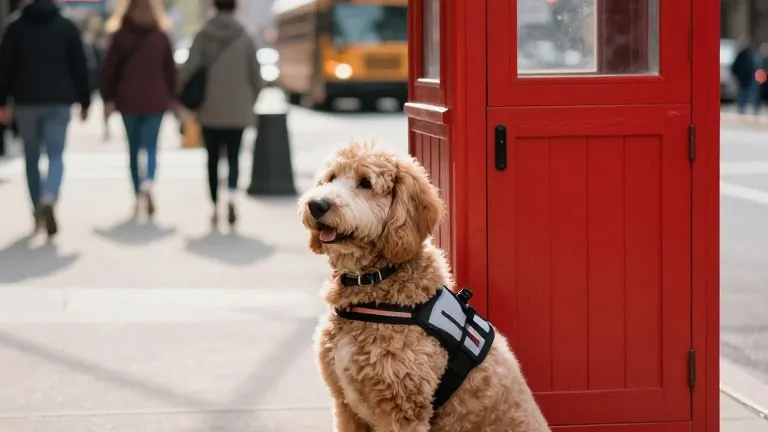
James Poggi, a former Marine Corps aviation specialist, relies on a Goldendoodle named Teddy to perform daily tasks that his body can no longer manage alone. Poggi underwent five back surgeries and a below-the-knee amputation after sustaining injuries from hard landings, accidents, and a car crash during his active service. He also developed spinal meningitis. These conditions left him dependent on wheelchairs and walkers, a stark contrast to his earlier life as a 6-foot-3, 250-pound service member.
Teddy acts as Poggi’s primary support system, retrieving dropped items like keys and cell phones. This assistance allows Poggi to maintain a level of independence he feared losing. Poggi described the dog as his "battle buddy," noting that the animal consistently has his back. This physical support also contributes to his emotional well-being, a factor he said is comparable to the joy he feels from his children.
Poggi trained Teddy at Dog Training Elite St. Louis, a facility that prepares dogs for real-world scenarios rather than just basic obedience. Matt Willis, the owner of the training center, said the interaction between veterans and their dogs triggers chemical changes in the body that help address both physical limitations and post-traumatic stress disorder. Willis noted that while the government attempts to support veterans, gaps remain in the care provided for those with trauma-related conditions.
To address the financial burden of service dog training, Willis is distributing a private donor grant. The funding will cover 30% of the training costs for 10 veterans or active military members. Willis said the grant was specifically earmarked for military personnel to help them access the benefits of these animals. This financial assistance targets a specific segment of the market where demand is high but out-of-pocket costs are often prohibitive.
Data supports the utility of these animals for military personnel. A 2024 survey of approximately 600 veterans found that about four in 10 had never had a PTSD service dog but expressed a desire for one. A separate 2024 study indicated that service canines are associated with lower rates of anxiety and depression in veterans with PTSD. These findings suggest a growing market for specialized animal training services aimed at the veteran demographic.
The Department of Veterans Affairs does not currently provide service dogs for mental health conditions, including PTSD. The agency continues to study the potential benefits of such interventions. Poggi plans to return to his job as a school crossing guard in Mascoutah next school year. He intends to work full-time with Teddy by his side, using the dog’s assistance to manage his duties at the corner of his assigned route.
The collaboration between private trainers and military personnel illustrates a shift in how veterans seek support for their health. The combination of physical aid and emotional regulation provided by service dogs addresses needs that traditional medical systems may not fully cover. Poggi’s return to his crossing guard position serves as a concrete example of how this partnership functions in a professional setting.
Source: KVLY-TV
More Business · Watch Your Wallet · Report a business · Got a Story?