Afghan poppy acreage quadruples to 43,300 hectares as Taliban ban weakens
UNODC data shows a sharp rebound in cultivation, with opium sales hitting $525 million in a year when cotton prices collapsed and child malnutrition rose.
By Stephen Collins ·
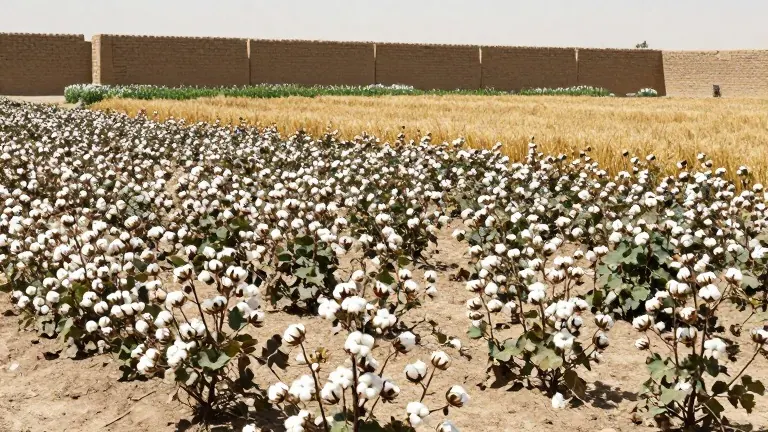
Carpets still hang on the walls of Mohammad Dawood’s home in the Baba Yusuf village of Balkh province, but the ornate mirrors that once caught the light now sit in a house struggling to survive on legal crops.
The 28-year-old farmer said he spends his days bent over cotton and wheat fields that barely provide a living. In years past, a single poppy harvest could sustain his family for an entire year. Now, he stated, his children are malnourished. "We were doing well," Dawood said in an interview at his home. "Now, my children are malnourished."
A United Nations Office on Drugs and Crime report released Thursday indicated that poppy cultivation across Afghanistan more than quadrupled this year, reaching an estimated 43,300 hectares. This figure is still only about a quarter of the 177,000 hectares planted in 2021, the year before the Taliban imposed a strict ban on the crop four years ago. The Taliban began enforcing the ban to reduce global opium supply, a move that initially saw the country produce about 80% of the world's supply.
Despite the increase in acreage, opium sales in Afghanistan generated an estimated $525 million this year, according to the UN. This is the highest figure since 2018, excluding 2022 when the initial ban caused prices to skyrocket. Many farmers hide their crops inside cereal fields or behind mud walls to avoid Taliban scrutiny. Polleak Ok Serei, the UNODC country representative for Afghanistan, told Reuters that many farmers "don't have any other choice than to go back to poppy cultivation." The Taliban rejected the report's findings, claiming actual cultivation was about half the UN estimate and that eradication efforts continued.
The economic pressure on legal crops has intensified. Cotton prices have fallen by about two-thirds due to a nationwide glut, a situation Gul Nazar, a 56-year-old landowner, partly blames on Pakistan's closure of the border late last year. Wheat barely covers its costs, and recurring droughts have shrunk rivers and canals, leaving well water briny enough to damage crops. At the Alam Khil health center in Balkh, doctors treat a growing number of severe malnutrition cases. Tahira, whose husband grows cotton, waited with her seven-month-old son Benjamin, who suffered from fever and diarrhea. "The doctors say he is malnourished," she said, adding that the family was barely making ends meet.
UN agencies warned this month that 10 out of Afghanistan's 34 provinces had critical levels of child malnutrition. The number could climb to 14 in 2027, they said. Foreign aid cuts and the Taliban's international isolation have also played a role, diplomats say. Salima Mohammadi, a nutrition nurse at the clinic, noted that many families had struggled to find another crop that could support them. "People own farmland," she said, "but agricultural yields decrease year after year."
The Taliban regard the ban as a signature achievement and have cited it in efforts to win international legitimacy. Amir Khan Muttaqi, the Taliban's foreign minister, said at a meeting this month that support for alternative livelihoods was crucial to ensure the continuation of the campaign. However, Ok Serei said there was not enough support for these alternatives from the Taliban government or the international community. Until the ban, pre-ban stockpiles cushioned the global shortage and blunted price spikes in Europe. UNODC warned those stockpiles may be running out, strengthening the incentive for farmers to plant again.
Source: KELO