Final ice patch vanishes from Slovenia’s Triglav glacier
The last remnant of the mountain's ice mass has melted away, ending a two-decade holdout against Alpine warming.
By Alejandro Ruiz ·
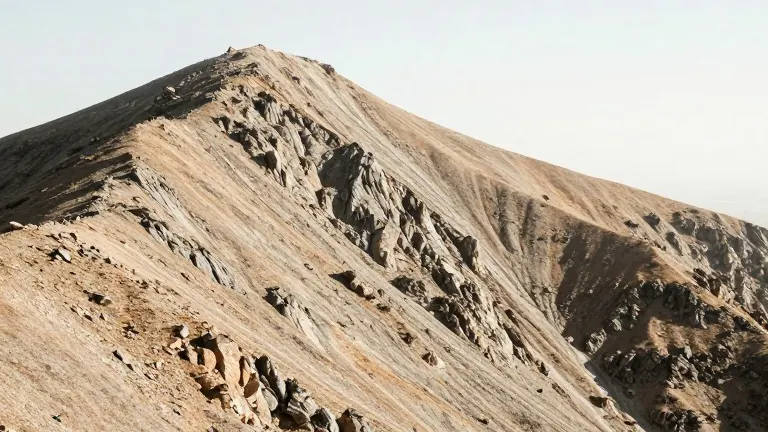
The last remaining ice patch on the Triglav glacier in Slovenia has disappeared, confirming the end of the country’s only major high-altitude ice mass. New photographs taken before and after a recent snowfall show no ice left on the mountainside. This loss marks the final casualty of a scorching summer that set records across Europe.
The glacier had already lost 93% of its surface area between 1983 and 2003. By that point, it covered less than one hectare of rock. Researchers expected it to vanish then, but it persisted for another twenty years. Over the last five years, which include Europe’s three hottest years on record, the remaining ice melted into isolated pockets. The final piece of the main body measured only a few meters by the end of the summer.
Historical records show the glacier covered about 40 hectares in the mid-1800s. By 1946, the first formal measurements recorded an area of just 14 hectares. Matija Zorn, director of the Anton Melik Geographical Institute, has tracked the site since 2001. He noted that the point where he had to attach crampons to his boots moved back up the mountain every year. In 2002, a core sample taken at a specific spot was five meters deep. By 2003, Zorn was standing on rock at that same location.
Zorn described the melting as incredible. He said he knew the ice was decreasing annually but was shocked by the speed of the decline. The glacier is a central part of Slovenian national identity and serves as a key indicator of climate change. Its loss removes a long-term data source for scientists.
The disappearance fits a wider pattern in the Alps. Fierce heatwaves intensified by carbon pollution have reduced large glaciers to rocky deserts. Last month, Swiss glaciologists reported that nearly a fifth of the country's ice vanished in the last five years. The volume of Swiss ice dropped by 5.5% in 2026 alone.
Western Europe experienced its hottest summer on record this year. The heatwave caused at least 50,000 estimated heat deaths. Secondary effects included failed harvests and power plant shutdowns. Scientists are still assessing the damage to local ecosystems.
Miha Pavšek, a glaciologist and mountain guide, said nature is changing in front of people’s eyes, but the public is not yet taking it seriously. Pavšek has a photograph of his parents on the glacier in 1957. He stated that the melting feels like a part of him is going away. He added that glaciers are not eternal, despite what many thought.
Triglav is Slovenia’s highest peak. It is a cultural touchpoint where skiers and climbers are expected to summit at least once. Although the main glacier is gone, scientists found ice in caves beneath the peak. The retreat exposed new shafts that retain cold air. A second glacier on the nearby Skuta mountain has also shrunk and thinned. That patch is better shaded and is expected to last for a few more years.
The Anton Melik Geographical Institute will continue monitoring the area. The next formal survey of the exposed rock and sub-glacial ice caves is scheduled for next spring.
Source: The Guardian