Aquarium of the Pacific Prepares for First-Ever West Coast Sea Turtle Hatch
Biologists expect 204 olive ridley eggs to emerge within days after federal agents moved them to a controlled environment to save them from rising tides.
By Stephen Collins ·
The first sea turtle eggs ever recorded on California beaches are poised to hatch within days at the Aquarium of the Pacific in Long Beach.
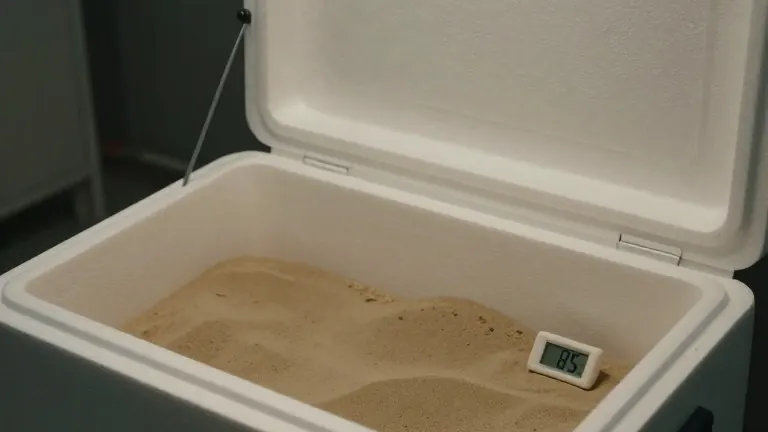
The 204 olive ridley eggs currently rest in styrofoam coolers filled with sand, mirroring the conditions of their original nesting sites. Wireless sensors track the temperature inside these containers, which staff maintain between 85 and 86 degrees Fahrenheit. Aquarium employees inspect the makeshift nursery three to four times daily, though they plan to increase checks to every other hour as the hatching window approaches.
The timeline for this event began in late September when extreme marine heat waves and strong El Niño conditions pushed ocean temperatures closer to the species' typical tropical habitat. On Sept. 16, an olive ridley sea turtle emerged from the surf near the Surfside community in Seal Beach to lay a clutch of eggs. Three days later, on Sept. 19, a second turtle nested eight miles south in Huntington Beach.
Forecasters warned that high tides would inundate the Orange County nesting sites. In response, federal biologists made a last-minute decision to relocate the eggs to the aquarium on Sept. 29. The National Weather Service extended flood advisories for all Southern California coastal counties through 2 p.m. Friday, according to Devin Black, a meteorologist for the weather service’s Oxnard office.
Dr. Lance Adams, the aquarium’s director of veterinary services, stated that the eggs' development should have continued uninterrupted since the move. He noted that while sand temperature influences the sex of the hatchlings, the team has worked to keep the eggs in their ideal thermal range. However, the impact of their initial weeks in the Orange County sand remains uncertain.
When cameras show sand settling above the eggs, a sign that hatching has begun, the coolers will be moved to a dark location. This step ensures the hatchlings conserve their energy until evening. In the wild, hatchlings wait in the sand until nightfall to reduce predation risk and use moonlight to guide them to the water.
Upon release, the turtles will enter a phase of intense, continuous swimming to reach open ocean areas. Federal biologists will monitor surf conditions and currents at nearby beaches to select the optimal release site. The release will not be announced in advance to minimize disorienting lights and crowds.
Pamela Plotkin, a retired oceanography professor at Texas A&M University, wrote in an email that she expects 85 to 95 percent of the eggs to hatch. She predicts that a few of the hatchlings may survive to adulthood and return to California beaches to nest in 10 to 15 years.
Source: Los Angeles Times