40,000 Salmon Lost to Trawlers in Alaska Senate Fight
Industrial fishing waste is driving a tight U.S. Senate race in a state where subsistence livelihoods depend on returning fish stocks.
By Alejandro Ruiz ·
Pollock trawlers have caught 40,000 Alaska salmon this year, a figure that anchors the central dispute in the state's U.S. Senate race. These fish are discarded as bycatch while vessels target the white pollock that serves as the base for imitation crab products. The loss occurs in western Alaska, where indigenous communities rely on the Kuskokwim River for sustenance.
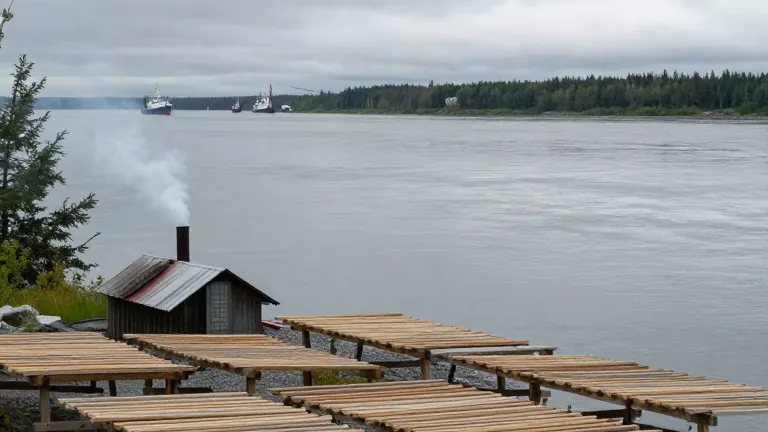
Evon Waska, who lives on the river's edge, reports that his drying racks remain empty. He attributes the decline to industrial trawlers operating miles offshore in the Bering Sea. Waska notes that government agencies frequently close the river to subsistence fishing to conserve stocks, yet they leave the offshore trawlers operating. He stated, 'They don't close the trawlers. They close me and my people first.'
The pollock industry, valued at approximately $1 billion and largely based in Seattle, uses large nets to harvest fish. While the primary target is pollock, the nets also trap prized king salmon and other species. These unintended catches are often wasted, a practice known as bycatch. This issue has become a primary theme in local political advertisements, with both candidates addressing the conflict between industrial fleets and local fishermen.
Republican incumbent Dan Sullivan, who has supported the pollock industry, is promoting a new bill to address the issue. Sullivan described the measure as the most comprehensive bycatch legislation ever to reduce waste and protect seafloor habitat. His Democratic challenger, Mary Peltola, who is indigenous and from the Kuskokwim region, argues that Sullivan's proposal is an election-year strategy. Peltola said Sullivan 'reeled in over $300,000 from trawlers and waited until the 11th hour for a half-hearted and half-baked solution.'
Heather Mann, who leads a trawlers association, contends that eliminating the pollock fleet will not solve the salmon decline. She cited scientific findings indicating that removing pollock would have a minimal impact on salmon runs. The trawler industry maintains that the 40,000 salmon lost this year represent a small percentage of the total pollock harvest, though the waste carries significant cultural weight in remote villages.
In the village of Kwethluk, subsistence fishing is the primary occupation and a cornerstone of local culture. Tribal president Mary Nikolai observed that most smokehouses in the community sat unused throughout the summer. She described the situation as a slow trend of closing the local workforce out. The empty facilities reflect the acute impact of declining salmon populations on daily life in these remote areas.
President Trump is attempting to preemptively block election results in Alaska should the Republican incumbent lose the seat. The race has drawn national attention because the outcome could shift the balance of power in the U.S. Senate. The dispute over fish has become a proxy for larger questions regarding resource management and indigenous rights in the state.
Source: WBAA