US, Japan to build joint missile plant in Cebu
Defense ministers agreed to establish a final assembly facility for F-35 missiles during ASEAN meetings in the Philippines.
By Stephen Collins ·
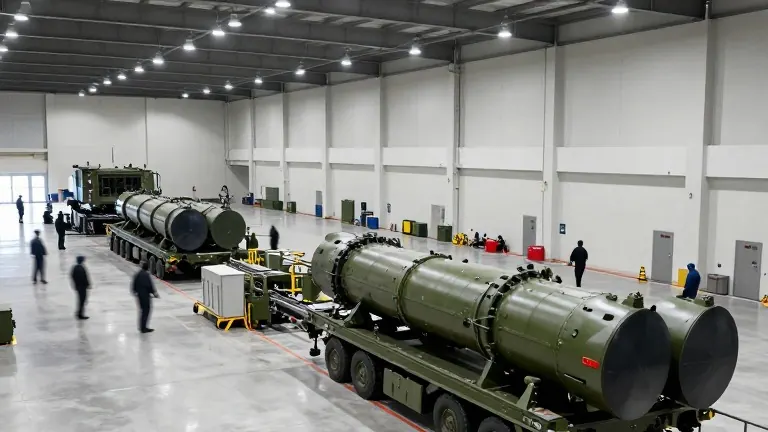
Annual defense ministers' meetings in the Philippines served as the backdrop for a new industrial pact between Washington and Tokyo. The United States and Japan agreed on Wednesday to construct a joint facility in Japan for the production of advanced medium-range air-to-air missiles.
Japanese Defense Minister Shinjiro Koizumi announced the plan during a news conference in Cebu. He met with U.S. Defense Secretary Pete Hegseth on the sidelines of the annual gathering of Southeast Asian defense chiefs. The two nations designated the project as "Operation Supercharge," which will produce Advanced Medium-Range Air-to-Air Missiles, or AMRAAM. These weapons are essential for the F-35 fighter jets operated by both militaries.
Koizumi stated that the two sides agreed to build a final assembly and inspection plant in Japan. He noted that the alliance aims to strengthen deterrence and response capabilities with greater speed and intensity. "We reaffirmed the importance of a free and open international order based on the rule of law, which rejects any attempts to unilaterally alter the status quo through the use of force, coercion or other means," Koizumi said.
The agreement comes as Japan accelerates military buildup in its southwestern region to deter China. Koizumi expressed concern over increasing Chinese naval activity in the area. He reported that three Chinese destroyers and a coast guard ship crossed the Osumi Strait south of Kyushu this week. His ministry identified this as the first time it had spotted such a specific fleet configuration moving east toward the Pacific.
Koizumi called the incident an example illustrating the challenging security environment in the region. He said his ministry would monitor the activity with a high level of interest. The annual meetings in Cebu aim to avert major regional conflict and strengthen defense cooperation among Asian and Western partners.
Hegseth addressed ASEAN defense ministers in a separate session on Wednesday. He did not mention China by name but described the U.S. approach as "strong, quiet and clear." He said the strategy is strong enough to deter coercion, quiet enough to avoid needless escalation, and clear enough for partners and adversaries to understand where the United States stands.
The U.S. and China, along with their respective allies, often trade criticisms during the sidelines of these meetings. The Philippines, Vietnam, Malaysia, Brunei, and Taiwan maintain overlapping claims in the South China Sea. Washington has warned it is obligated to defend the Philippines if Filipino forces come under armed attack in the disputed waters.
Source: WWNO