Papal Transport: From Horse-drawn Carriages to Electric Popemobiles
A Vatican exhibit traces 120 years of automotive innovation, from Pius X's refusal of a car to Leo XIV's recent use of an electric vehicle.
By Alejandro Ruiz ·
Car manufacturers have spent a century competing for the privilege of serving the papal household, evolving from simple sedans to bulletproof, electric vehicles designed for public visibility. The shift began with a rejection. In 1903, the Archdiocese of New York offered St. Pius X a car, but he declined the gift. Sandro Barbagallo, curator of historical collections at the Vatican Museums, explained that the pope preferred walking in the Vatican Gardens and hearing horses' hooves rather than the noise of an internal combustion engine.
The first automobile to reach the pope came after the 1929 Lateran Pacts ended the restriction that had confined popes to Vatican City walls since 1870. A U.S. Graham-Paige 837 was the first vehicle to arrive, and Pope Pius XI used it to travel to St. John Lateran for Mass, becoming the first pope to drive on public roads. However, a Mercedes-Benz Nürburg 460 limousine given to him in 1930 soon took over the role. Unlike the standard Graham-Paige, which Barbagallo described as looking like a gangster's car, the Mercedes featured a large silk-brocade upholstered chair and specific controls for the pope.
Marcus Breitschwerdt, CEO of Mercedes-Benz Heritage, detailed those 1930 controls during an unveiling event on Oct. 28. The pope could press buttons to signal the driver to go faster, slower, turn right, turn left, or go home. This level of customization helped solidify a relationship between the Vatican and Mercedes-Benz that has lasted nearly 100 years. The company also marked the 140th anniversary of Karl Benz's 1886 patent for a gas-powered vehicle during the same period.
Before the popemobile, popes traveled in a sedia gestatoria, a portable throne carried on the shoulders of 12 men. Toyota created the first vehicular version for St. Paul VI in 1975. The company modified a white Land Cruiser by removing the roof and rear panel, allowing the pope to stand and bless crowds. However, the vehicle lacked a seat, forcing staff to retrofit a swivel chair from a barber's shop onto a metal base for St. John Paul II.
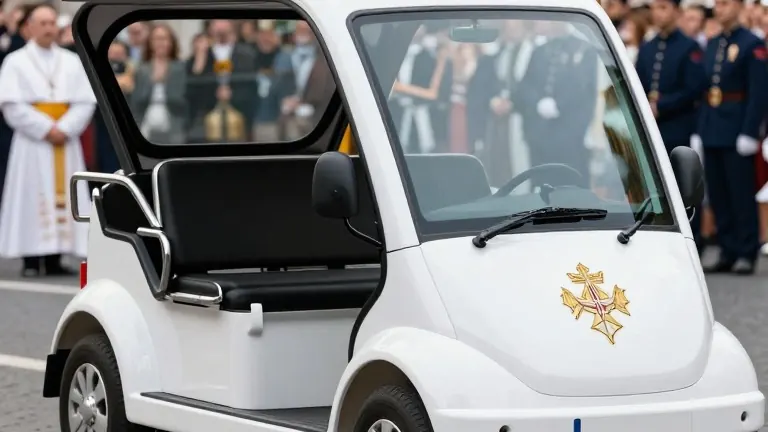
The need for protection changed the design after a gunman shot and hit St. John Paul II in 1981 from a white Fiat Campagnola jeep. Subsequent vehicles required bulletproofing. The most recent evolution focuses on sustainability. Mercedes-Benz built the first fully electric, emissions-free popemobile for Pope Francis before the 2025 Holy Year. Pope Leo XIV used this vehicle during his trip to France in 2026.
Pope Leo XIV addressed representatives from Mercedes-Benz at the Vatican on Oct. 28. He stated that the popemobile has evolved from a means of transportation into an instrument of encounter, enabling the pontiff to draw closer to the faithful. He encouraged the company to continue placing technological innovation at the service of human dignity, care for creation, and the common good.
Source: The Catholic Spirit