Midterm candidates debate the economic impact of the One Big Beautiful Bill Act
While Republicans emphasize new tax breaks, Democrats and some voters argue that Medicaid cuts and high costs are overshadowing the bill’s benefits.
By Emma Foster ·
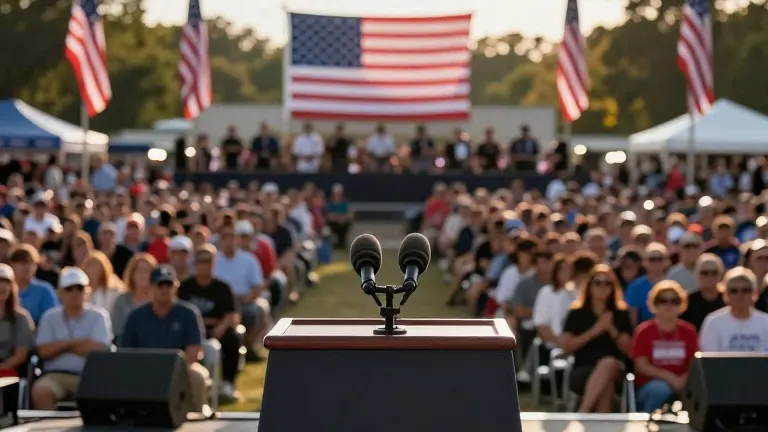
Washington, D.C., The One Big Beautiful Bill Act has become a central point of contention in the 2026 midterm election cycle, with candidates on both sides of the aisle framing the legislation in different ways. The law, signed by President Donald Trump in July 2025, introduced a series of tax breaks for American households while simultaneously reducing funding for specific social service programs. As the election season progresses, political figures are leveraging these changes to appeal to voters concerned about their daily finances and healthcare coverage.
Republican officials have consistently promoted the legislation as a major economic victory. President Trump, speaking at a midterm rally in Corpus Christi, Texas, on Tuesday, described the bill as delivering the largest tax cuts in American history. Other GOP figures have echoed this sentiment, pointing to specific provisions that lower the tax burden on workers. Rep. Derrick Van Order, R-Wis., stated at the party’s convention in September that many Americans are unaware that the law removes taxes on tips and overtime pay, suggesting that these changes are providing tangible relief to households.
Democratic candidates have focused their criticism on the distribution of the law’s benefits, arguing that it favors high-income earners at the expense of the middle class. James Talarico, a U.S. Senate candidate in Texas, proposed in an interview this past August that the tax breaks for the top 1% of earners be reversed. He suggested using the estimated $1 trillion in savings from those changes to provide a cost-of-living tax adjustment for middle-class families. Talarico described these policies as measures that would directly benefit residents in his state.
Beyond the tax structure, the law includes substantial modifications to Medicaid that are influencing how some voters evaluate candidates. Amber Mader, a voter in Arkansas who relies on Medicaid and Social Security Disability, reported that the services she depends on for home health care nursing and transportation have been reduced since the law’s passage. Mader, who is disabled and paralyzed, said the tax cuts do not provide any financial benefit to her, while the disruptions to her basic services are a daily reality. She stated that these changes are causing her to scrutinize candidates more closely during this election cycle.
Experts have weighed in on whether the legislation effectively addresses current economic pressures. Dr. Todd Belt, a professor at George Washington University, noted that affordability remains the primary concern for voters, citing high prices for gasoline, groceries, and healthcare. He observed that a small tax cut often does not offset these ongoing costs for many households. Elena Patel, co-director of the Urban Brookings Tax Policy Center, agreed that tax policy is difficult to use for immediate affordability issues. Patel added that while early changes may have benefited lower-income families, the long-term effects of the bill are likely to show greater advantages for high-income taxpayers.
The debate over the bill’s efficacy continues as the election season moves forward. Candidates in Central Alabama and across the nation will likely continue to reference the law’s provisions as they campaign for office. The differing perspectives on tax cuts and program cuts provide a clear divide in how the two parties are messaging to voters. As polling closes in November, the final outcome of the midterms will reflect how voters weigh the promised tax relief against the immediate impacts of reduced social services.
Source: WBRC FOX6 · original report published
More Politics · Birmingham news · Report a business · Got a Story?