Xi Jinping's Four-Day Session Targets Party Loyalty Amid Low Turnout
Approximately 300 Communist Party officials convene to discuss discipline, with analysts anticipating stricter oversight and military leadership changes.
By Stephen Collins ·
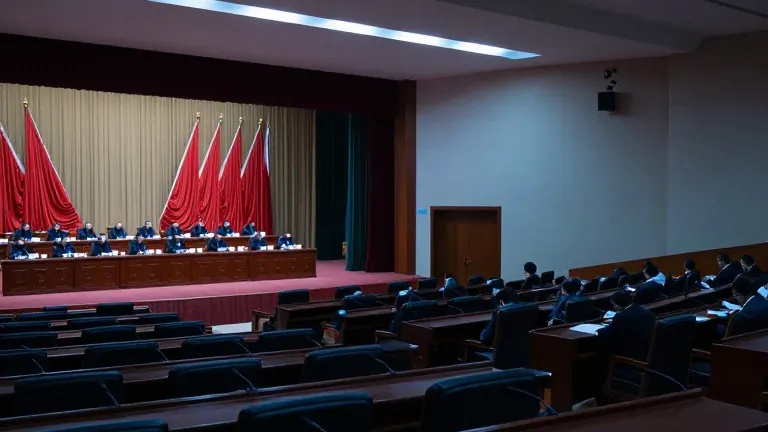
Chinese Communist Party leaders began a four-day closed-door session on Monday to address internal discipline and align officials with President Xi Jinping's strategic goals. The gathering, known as the fifth plenum of the Central Committee, is expected to produce a draft policy decision focused on rigorous self-governance. The timing is notable as it precedes the 2027 National Congress, where Xi is widely expected to secure a fourth consecutive five-year term as party leader.
Attendance at the meeting is lower than in previous decades due to Xi's ongoing anticorruption campaign. Roughly 300 Central Committee members are in attendance, but eight seats remain vacant. Another 15 members are currently under investigation and face potential removal. This turnout represents the lowest level since the death of former leader Mao Zedong in 1976. The purge has significantly impacted the military, with five of the seven members of the Central Military Commission toppled in recent years.
Xi has used previous plenums to consolidate authority and enforce loyalty among rising officials. In a speech published by state media in January, he criticized "two-faced" cadres who comply with directives outwardly while resisting them internally. He described these officials as politically opportunistic and driven by individualism. The current session aims to make the remaining cadre more effective and disciplined through increased supervision.
Ruby Osman, a senior policy adviser at the Tony Blair Institute for Global Change, told the Associated Press that the meeting serves to ensure new generations of leaders share Xi's view of China's opportunities and risks. Neil Thomas, a senior fellow at the Asia Society Policy Institute, expects the plenum to demand tighter scrutiny of public spending and major projects. He also anticipates greater use of technology to detect corruption and harsher penalties for officials who fail to meet Xi's priorities.
The political discussions occur while China faces economic headwinds. The world's second-largest economy is dealing with sluggish domestic spending and a prolonged crisis in the property sector. Tensions with the United States also weigh on the leadership. The plenum may result in the appointment of new members to the Central Military Commission, potentially altering the party's structure for controlling the armed forces.
The session is watching closely by analysts for signals regarding future personnel changes in key leadership bodies. The draft policy decision will outline specific measures for advancing party self-governance. The outcome will influence how the Communist Party manages its internal ranks and addresses perceived inefficiencies among its leadership.
Source: Al Jazeera